My mom wanted to see the exposition Körperwelten (Body Worlds in English). At first I wasn't especially thrilled to go. I thought it was another artsy fartsy exhibit with dead people's bodies. But, since I did like the idea of doing something with my mom, off we went. In retrospect I'm actually glad she proposed it. The exhibit was surprisingly tasteful and expertly done. In reality it's not an art venue, but rather an educational exposition. The object is more about giving a lesson in anatomy 101. You start with a bare skeleton, and gradually the bodies get more fleshed out, as the next part is being explained. A visit should be made compulsory for med students, but also for high school pupils. The whole is very scientific, yet respectful. And I must admit I got schooled today in a pleasant manner.
zaterdag 14 februari 2009


maandag 17 maart 2008
European history exhibit
This week-end my girlfriend and I finally got around to seeing It's our history!, an exhibit aimed at promoting European culture and identity being held at Tour & Taxis Brussels until the 12th of May. We were able to walk through at our own time without being bothered by too many people crowding us. I think that had a lot to do with the fact that in the rooms opposite the Star Wars exhibition can be found. Who needs Europe when you got Yoda, right? That'll be for the next time.

The exhibit starts with a very dark room where the only thing there is to see is the picture above. Actually it's a movie (scale 1:1) representing the EU. Every person on it is from one of the 27 countries. We are told that each has his/her own special story to tell. So we waited for them to say something. Which they didn't. And we stood there like idiots trying to find something else in the room. A bit disapointed we trudged on. But also a bit relieved because if we had to wait there to listen to 27 stories ... Anyway, point taken (diversity of Europe and all). Spread over the exhibition, there were separate videos telling the story of each individual, including a couple that escaped the DDR by digging a tunnel under the Wall, a member of Solidarność, the French and English diggers who shook hands on completion of the tunnel under the Channel, and others.
After that a few pieces of art are on display (couple of paintings, statues and conceptual totalitarian boots), emphasizing that 50 years of piece on the European mainland is/has been the exception on the rule. Or maybe the expo started with this part. Can't remember. Anyway, next up is the year 0, i.e. 1945. The war was over. A large part of the countries involved were mostly destroyed by the ravages of fighting, which meant Europe was in a bad shape. It also meant a clean slate. In a spark of genius the losing parties were involved in the rebuilding of the continent, instead of trying to punish them as hard as possible. This revolutionary act has changed the course of our political history for the best. That and the insight that intertwining our economies, coupled with a high standard of living, is the best way to avoid a new war. In a large part of course we owe our economical resurrection to the generosity of the Americans, through the Marshall Plan. We can argue that it was in the best interest of the US as well to create a stable economy in Europe, since we have close business relations; and in the long run they didn't give anything for free. Nevertheless they could have done nothing, which they didn't.
The great people that were at the basis and have helped shape the EU as we know it now are presented: Spaak, Monnet, Schuman, Churchill, Adenauer, De Gaule, Beyen, Bech, De Gasperi. But also those who weren't a part of the European political elite but had an influence nonetheless: Truman, Marshall, Stalin, Keynes, Beveridge. A part of the room is dedicated to each person. To add to the general atmosphere, subtle lighting is used. Unfortunately some parts were so subtle that it was rather difficult to see certain items. The centrepiece is a large video in black and white telling the story of the beginning of it all: the European Coal and Steel Community (ECSC), accompanied by a facsimile of the very first steel bar that was melded under the auspices of this new organization.
The following few rooms are dedicated to the general history of Europe since 1945. An overview is given of the changing living conditions following the support provided by the Marshall Plan. You are guided through the 50ies up until the 80ies in typical living rooms so to speak of that era, with examples of items used in the different eras. I think that the exhibit will be themed slightly different according to the country it will be in. Since we're in Belgium there are Belgian magazines for instance and a separate piece dedicated to the World Fair of 1958 (Expo '58) couldn't be left out.
The story of Europe is more than just the emergence of the consumption society of course. Up until the 80ies several dictatorships have ruled certain parts: Franco in Spain (1939-1975), Salazar in Portugal (1932-1968) and "The Regime of the Colonels" in Greece led by Georgios Papadopoulos (1967-1974). Each is being presented in a concise manner, but it's easy to fill in the blanks of how 'fun' it must have been during these rules. Even the countries that were democratically organized still had a historical debt to their colonies. During the 1960ies all of them started to demand (and eventually got) their independence. The transition from colony to independent state was always difficult and resulted in the large scale and unorganized moves of the former oppressor. For Belgium, the planes of Sabena (our former national air carrier) were mostly used. A replica is on display. Inside you can listen to the stories of several refugees in different languages.
The basis of the EU is to be found in the treaties, governing bodies and policies. A replica of a table were discussions are being held display a number of touch screens. Here you can read (in a bird's eye view) what the economic and political union is about. Every screen highlights a different aspect: the 'Temple' model (Commission, Parliament, Council, treaties and organizations), the policies (transportation, employment, agriculture, environment...) and law. A general overview is given together with a timeline. On the timeline clickable dots provide extra information on the different steps leading to the present day working.
By this time we have arrived in the 90ies. This means the disappearance of the Iron Curtain and the subsequent reunification of the European continent, including the enlarging of the Union. A brief history lesson about Eastern Europe follows, including the way of living under Soviet rule and the uprisings in that 50 year period (the Hungarian Revolution of 1956, Prague Spring in 1968, destruction of the Berlin Wall in 1989).
We're nearing the end of the exhibit. Several containers talk about the role of the EU in the globalized world. Each one has a different theme, from production, over illegal immigrants to lifelong learning. At the back of the container there is a lifesized video of two workers having a conversation explaining more or less each theme in a down to earth manner (alternately in Dutch and French). The last thing you get to see is a huge video wall with images of your past. There is computer screen in which you give in your birth date, followed by a period of time in your life, i.e. your twenties, thirties, youth, etc., and a specification in sports, music and culture. On the screen images and music is then projected. Really fun. We stood there for ten minutes or so trying out different eras. Until we finally realized we're not 10 years old anymore and we had better stop playing.
Conclusion - We have spent a nice few hours. The brochure said you need about an hour and a half to get through. It took us about three, although we didn't read or listened to everything. I must admit though that we didn't learn a whole lot more about the EU than we already knew. To us it felt it bit like preaching to the choir, since we're pretty much convinced the European project is a necessary evolution. There is still work to be done sure (eg. agricultural policy and its relation with Africa, the perverse effects of Dublin II), but it cannot be denied that for the most people the EU provides us with a stable economy and political situation. Some claim that life has gotten more expensive because of the Union. Prices have indeed gone up, but blaming it only on the EU betrays a weak understanding of the globalized economic flows. We mustn't forget that Europe is still a big player in the world, despite her small size (the entire EU is smaller than China). In order to remain a power to be reckoned with we need to evolve in the direction of more integration. I think the Belgian motto is applicable here: In unity lies strength. That's why I don't understand the people in my country who want Flemish independence. The 21st century will be the era of the supranational state IMHO, so why do they revert to a 19th century concept like the nation-state? They probably think the internets is TV with a pay button, we should all crochet our clothes once more and send those damn foreigners back where they came from. Getting a bit off topic there. Point is, I hope that at some point the different countries will cease to exist politically (not culturally).
As for the exhibit: a lot of people don't know about the EU, where it came from, or what it is doing now. Unfortunately, people who are not really interested in all of this probably won't spend €10 to get educated. This expo is an ideal school visit led by the history teacher. Get 'em while their young I say and when their minds are still open. And if the school isn't visiting, parents, I urge you to do it yourselves. Whether you like it or not, the EU is there and it has an influence on your lives. So you might as well know what it's about.
P.S. 1: Here are some more pictures.
P.S.2: In the near future Euranet, a radio and internet service, will see the light. "A major aim is to inform young citizens about the European Union."
donderdag 6 december 2007
Talking books
 The Hogeschool Antwerpen (College of Antwerp) has organized a virtual exhibit of 40 works of two of their libraries called Het Boek Spreekt (The Book Speaks). As they put it, it is the result of a project of inventarisation of the documentary heritage found in the libraries of the departments of Dramatic Arts, Music and Dance, and (Audio)Visual Arts. You can browse through the different documents in a webbased viewer, and even listen to some music. Each item is accompanied by extra information about the author and the document itself. The exhibit is only in Dutch, but even just to have a look at the pictures it's worth a visit.
 woensdag 21 november 2007
Some history links
dinsdag 23 oktober 2007
It's our history!
 "On the 26th of October 2007, the Museum of Europe", in collaboration with the Scientastic museum, "will be opening its doors to welcome you to an exhibition staged to celebrate the 50th anniversary of the Treaties of Rome, marking half a century of European unification." It's our history! 50 years of the European adventure will take place in Brussels at the site of Tour & Taxis until the 23rd of March 2008.
Opening hours: Monday to Friday: 9 am to 5 pm, Saturday, Sunday, public holidays: 10 am to 6 am, School holidays: 10 am to 6 am
Duration of the visit: 1h30 – 2h00
Price: 10 €
dinsdag 11 september 2007
Expo Leonardo Da Vinci
August 18 2007 till March 16 2008 you can visit the exposition Leonardo Da Vinci. The European Genius at the Basilica of the Sacred Heart, also known as the Basilica of Koekelberg (Brussels). Since they have used the available room in the fifth largest church in the world, it is a fairly large exhibit. Without really dawdling it took my girlfriend and me about two hours and a half to get through.

The exhibition is divided into several themes:
The person: the first part is constructed as a biographical sketch by means of paintings, statues and video images of the places he’s been. You start in Vinci, with a video wall that shows the house he was born in for instance. Then you go to Tuscany, where he developed his love for nature and science. Next is Florence where he worked as an apprentice with renowned artists. His drawings from that period are excellent. Next you are taken to Milan, Venice, Rome, the Adriatic and Val de Loire for his period of patronage (by the Medicis, Sforzas and the French King François I). It was nice to see how his ideas and skills developed over time, but, although it is an interesting introduction, for me it took a bit too long to get through. Especially because there was not much art to be seen from the hand of Leonardo. Most of it was comprised by works from other, contemporary artists. Nothing wrong with that as such, but that’s not what we were there for. Although the pieces that were there, were good, they weren’t extraordinary. A nice touch were the works that were inspired by him, e.g. Verochio’s statue of David, where Leonardo supposedly stood model for, Rafael's School of Athens (this was a lithography I think), where his face was used for Plato and Louis Gallet's painting of his death with King François I at his side (based on a popular French rumor). A bonus was his famed self portrait (or so I thought, in fact it is a "remake").

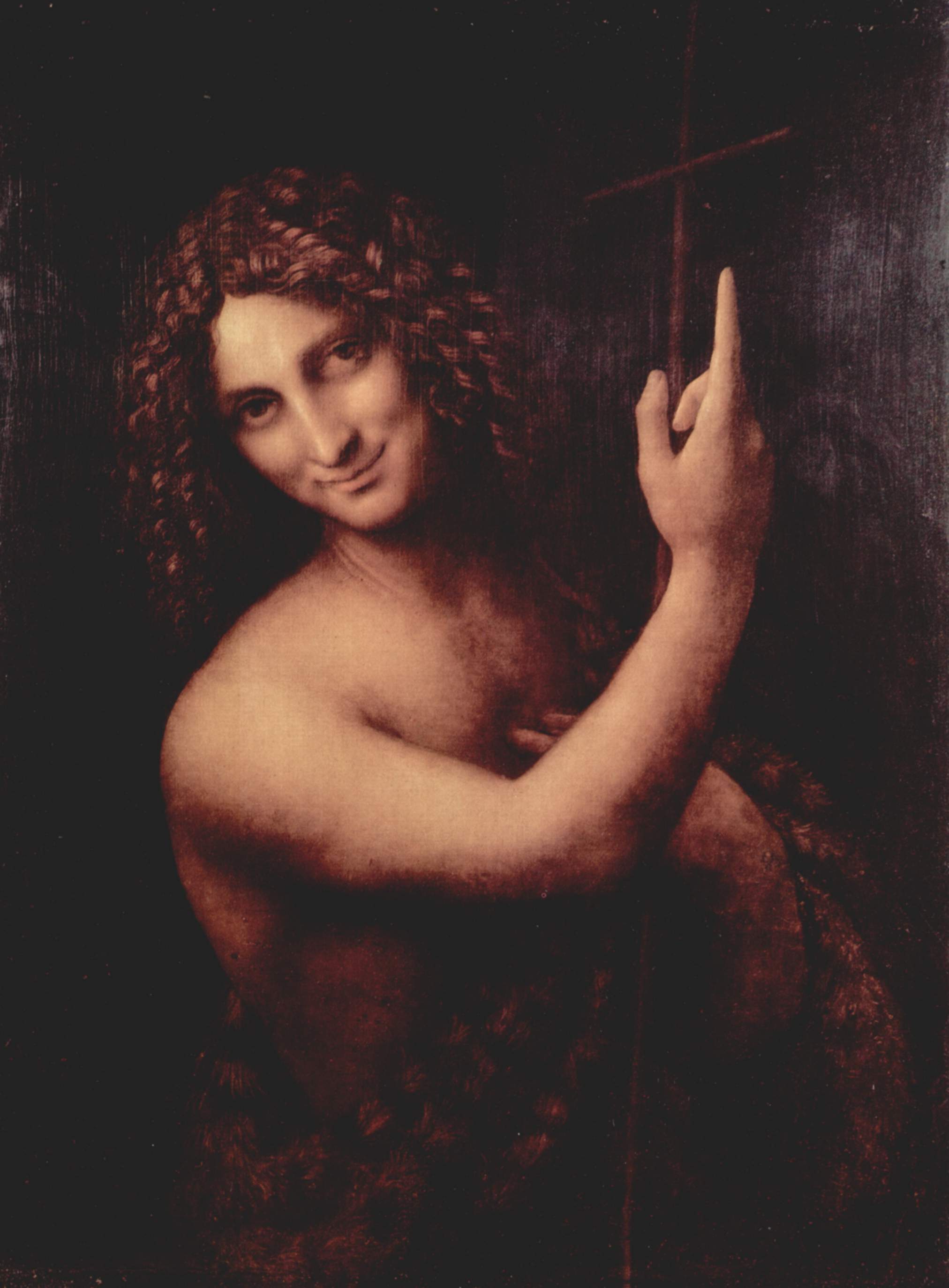
The artist: this was a mixture of paintings, drawings and video images with small documentaries about specific parts of his work. The most important piece in the first room of this part of the exhibit is the, well known, Vitruvian Man, depicting the perfect proportions of man. Together with the Mona Lisa, this image has become emblematic for Leonardo. So I enjoyed seeing it for real instead of on some poster. How wrong I was. But more on that later. Other works include different paintings and drawings by his hand, as well as mechanical sketches and a handbook that he had compiled. A bit further paintings of his students could be seen, some of which were quite remarkable. After this came the best paintings of the exhibition: Madonna (or Virgin) of the Rocks, the newly accredited Maria Magdalena and the Tongerlo abbey’s copy of the Last Supper.
Three copies exist of the Madonna of the Rocks, one in the National Gallery of London, one in the Louvre in Paris, and the one on display here coming from a private collection. In 1483 Leonardo and the de Predis brothers were commissioned by the Milanese Confraternity of the Immaculate Conception to paint a work celebrating the Immaculate Conception for their new chapel. The images to be portrayed were stipulated in a contract. Although Leonardo did paint what was asked he gave it his own interpretation. However he finished the painting too late, which led to a legal dispute. Eventually he made several versions with each a slightly different emphasis.

Maria Magdalena: this is the pièce de resistance of the exposition. The first mention of this painting was in a reproduction in a monograph of 1929 by Wilhelm Suida, who exhibited it in 1949. Since, this work was only shown to the public once, in Ancône in 2005. Although it has been named Maria Magdalena, there are virtually no elements of the traditional iconography to be seen. We see a woman with a scarlet cloak, bare breasted, holding a tip of the cloth in her left hand. Scans show that underneath the part of the cloak that is being held, there used to be something else. What, cannot be seen. One theory states that this was a dagger. If this is the case, it is reminiscent of Lucrezia Romana. The famous Roman Historian Titus Livius tells her story. She was raped by a nobleman, after which she takes her own life with a dagger.

The Last Supper: well, who doesn’t know this painting? The copy of the abbey of Tongerlo, of which we get to see a huge poster, is one of the best. Thanks to a different technique it is extremely well kept and still shows certain elements indiscernible on the original (whose decay took place within years of completion).

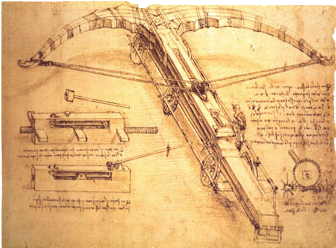
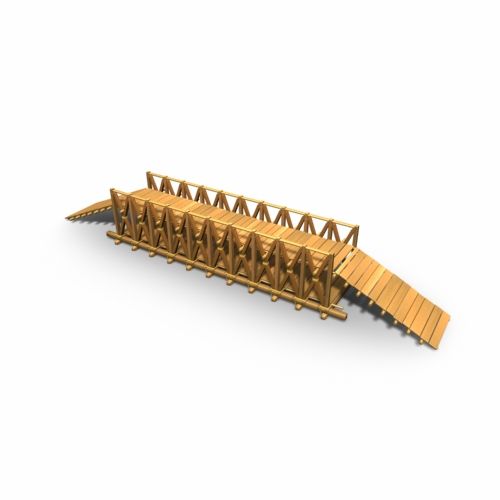
The engineer: here of course we were able to see the mechanical improvements and other inventions of his. On display were wooden models of his tanks, flying machines and bridges, among other things, flanked by his drawings on the subject.
The humanist: in the last rooms his (original) illustrations and codices were shown in the field of anatomy. His attributions to our understanding of the human body can hardly be underestimated. After years of studies he comes to understand the human anatomy on an unprecedented level, as revealed in his mirrored writing and detailed illustrations.

Conclusion: this exposition is ideally suited for a visit by a school to instruct their students about the importance of Leonardo, but a tad expensive if you already know more about his life and work. If you want to see something amazing go to the Louvre or the National Gallery in London. It was nice to see models of his machines. Another way of seeing them is to go to Le Clos Luce Chateau in Amboise (France).